
Services
DFM Guidelines
Design rules for our ceramic shell investment casting process. Your part is printed as a high-resolution pattern, invested in a ceramic shell, burned out, and cast in metal — these guidelines describe the geometry that process reproduces reliably.
Process overview
Tolerance: ±0.1–0.3 mm on critical features
Shrink allowance: +1.5–2.5% — we scale the pattern for you, so design to final dimensions
Section 01
Model Characteristics
Bounding Envelope & Aspect Ratio
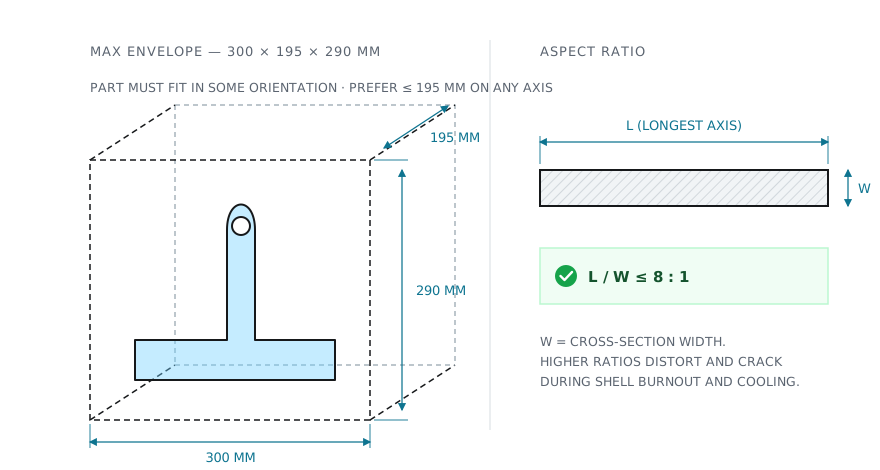
Your part must fit within a 300 × 195 × 290 mm envelope in at least one orientation — if it can't, it isn't castable as a single piece. Keep every axis at or below 195 mm where possible; dimensions between 200 and 250 mm need review. Long, slender parts distort and crack as the shell is fired and the casting cools, so keep the longest axis within 8× the cross-section width.
L / W ≤ 8 : 1
L = longest axis · W = cross-section width · envelope max 300 × 195 × 290 mm
Section Transitions & Mass Distribution
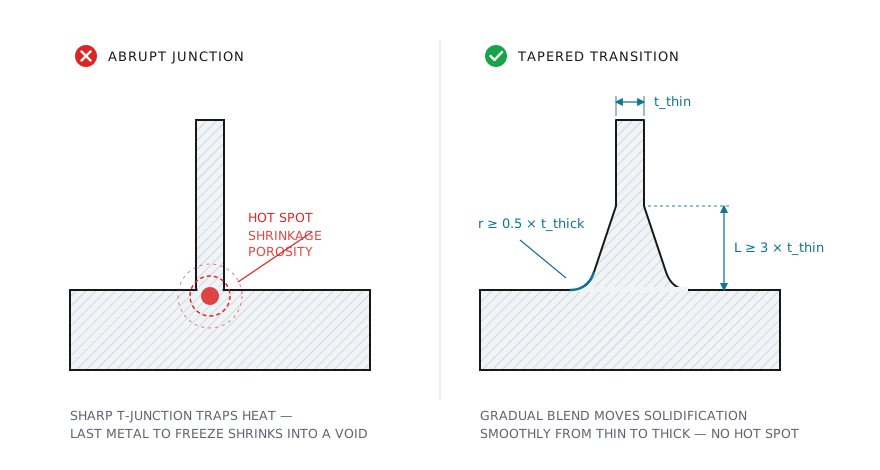
Abrupt changes in cross-section cause shrinkage porosity as the metal cools: the thick side keeps feeding the junction after the thin side has frozen, leaving a void or a hot tear. Blend between thin and thick regions with a taper at least 3× the thin-wall thickness, and fillet the junction.
L_blend ≥ 3 × t_thin · r_fillet ≥ 0.5 × t_thick
Gradual transitions prevent hot spots at thick-to-thin junctions
Section 02
Wall Thickness
Unsupported Walls
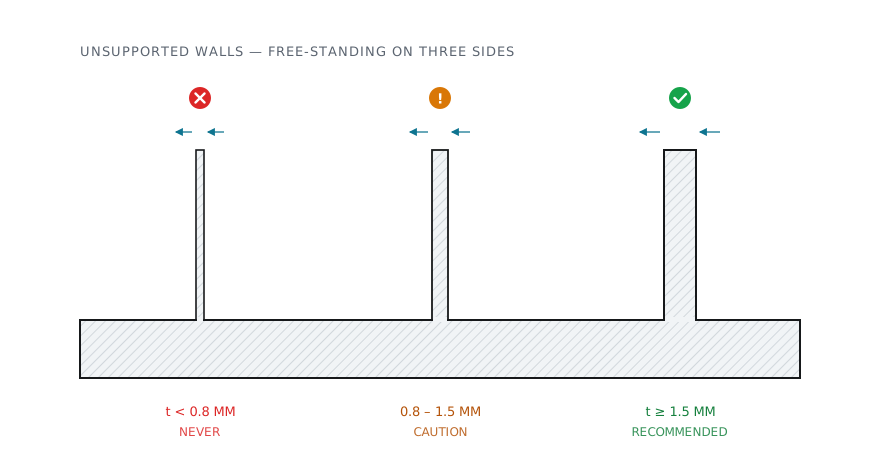
A free-standing wall — connected on only one side, like a fin or a blade — has nothing backing it up during the pour. Every wall must be at least 2.0 mm thick; thinner walls short-fill or cold-shut, and our DFM check rejects them.
Never
t < 2.0 mm
Recommended
t ≥ 2.0 mm
Supported Walls & Floors
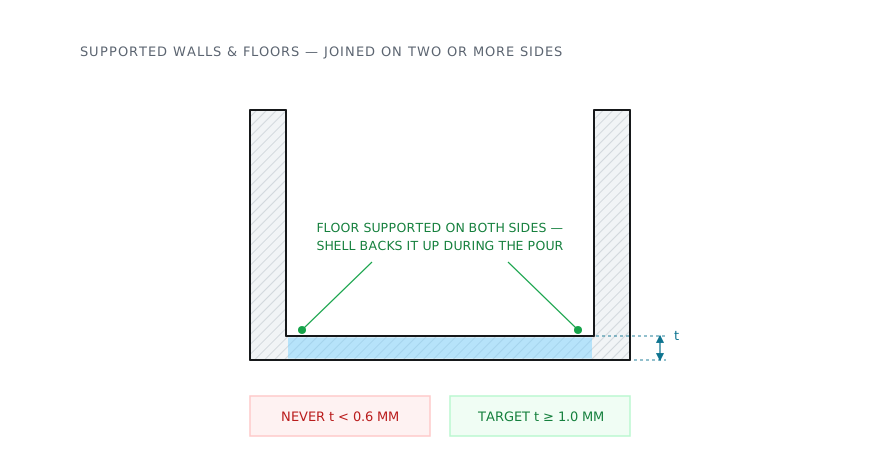
Walls and floors joined on two or more sides are backed by the shell and surrounding metal, but the same 2.0 mm minimum applies — it's what keeps fills consistent across the whole part.
Never
t < 2.0 mm
Recommended
t ≥ 2.0 mm
Section 03
Holes & Slots
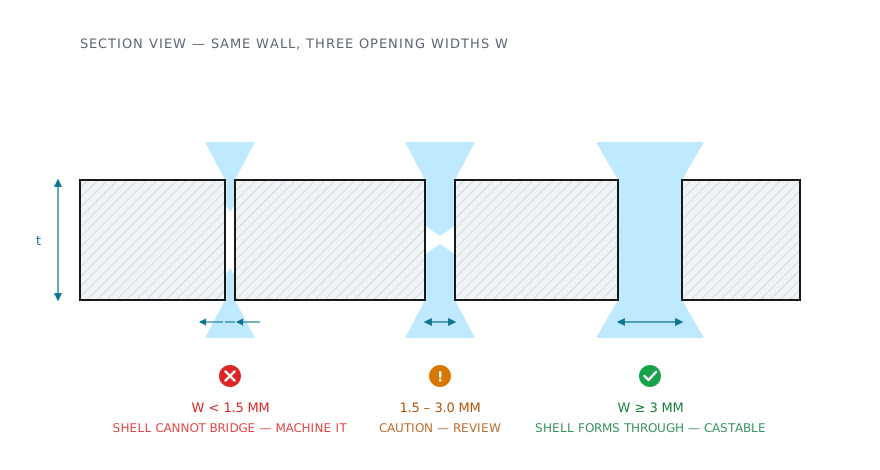
For every rule in this section, W is the narrowest opening width. It applies to round holes, slots, and irregular cutouts alike — for a slot, W is the slot's width, not its length. The shell has to form inside the feature, so the opening governs castability regardless of shape.
Through Holes & Slots
A through feature is castable when the shell can bridge the wall from both faces. Openings under 1.5 mm can't form a continuous shell — leave them out of the casting and machine them afterward. Openings should also be at least one fifth of the wall thickness they pass through.
Never
W < 1.5 mm
Caution
1.5 – 3.0 mm
Recommended
W ≥ 3 mm cast
W / t ≥ 1 / 5 · W ≥ 3 mm to cast reliably
W = narrowest opening · t = wall thickness the feature passes through
Blind Holes, Slots & Pockets
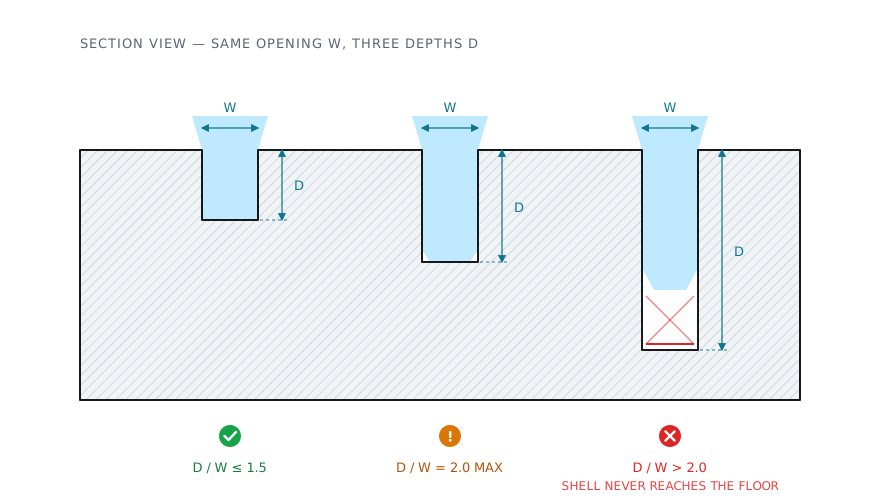
A blind feature only has one opening, so the shell must reach all the way to its floor and survive the pour as a cantilevered ceramic finger. Depth is limited by the opening width: keep the depth-to-width ratio at or below 1.5, never above 2.0.
Never
D / W > 2.0
Recommended
D / W ≤ 1.5
D / W ≤ 1.5 (absolute max 2.0)
W = narrowest opening · D = depth from open face to blind floor
Section 04
Gating
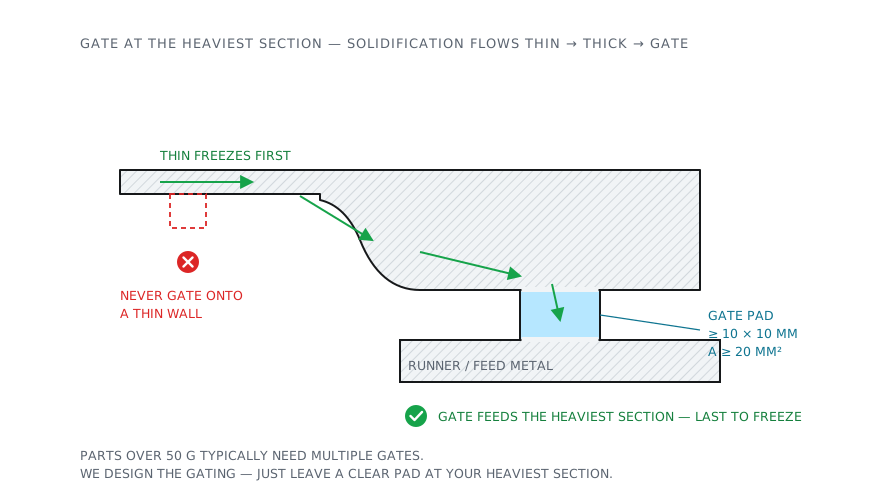
Gates are where metal enters your part — and where it keeps feeding as the casting shrinks. We design the gating system; your job is to make it possible: leave an accessible flat region of at least 10 × 10 mm on the heaviest section of the part. Solidification should sweep from the thinnest features toward the gate, so the gate region freezes last and feeds everything else. Gating onto a thin wall starves the casting. Parts over 50 g typically need multiple gates.
A_gate ≥ 20 mm² · pad ≥ 10 × 10 mm at the heaviest section
Solidification flows thin → thick → gate
Section 05
Internal Channels & Enclosed Volumes
Enclosed Volumes Need Drain Holes
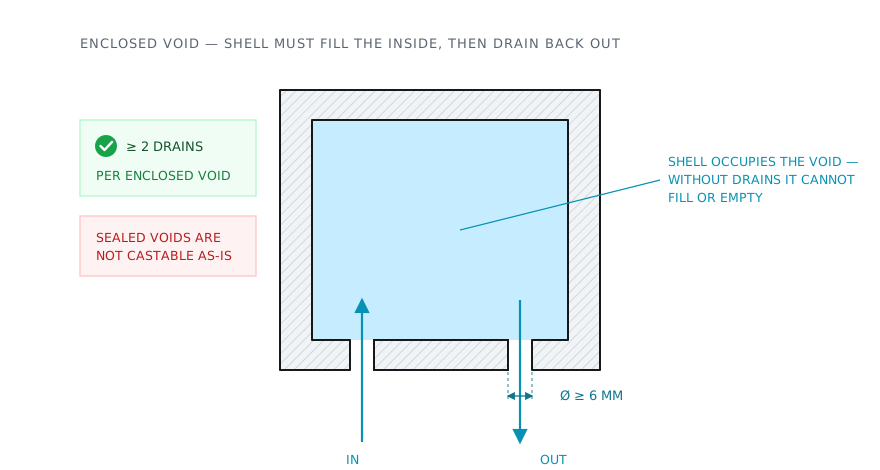
A fully sealed internal void is not castable as-is: the shell must flow into the void to form it, and drain back out — and after casting, the ceramic inside has to come out the same way. Every enclosed void needs at least two drain holes of 6 mm or larger, positioned so the void can fill and gravity-drain.
Ø_drain ≥ 6 mm · minimum 2 drain holes per enclosed void
Channel Diameter & Length
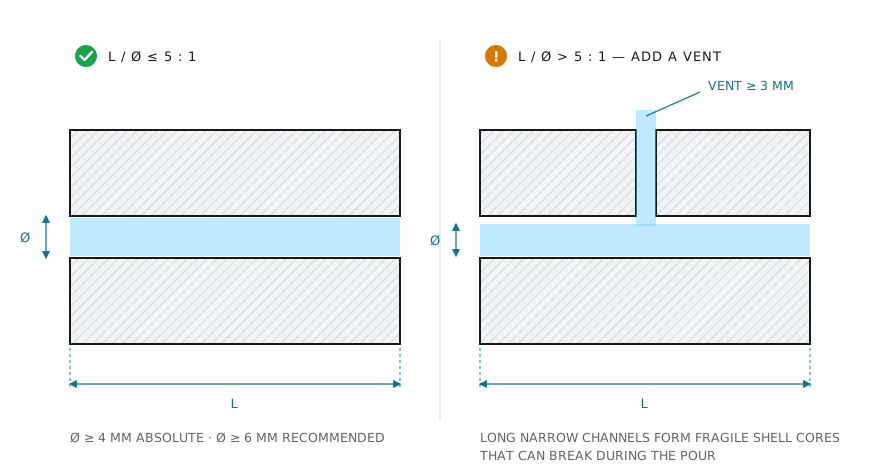
The shell that forms inside a channel is a slender ceramic core, and long narrow cores snap during the pour. Keep channels at 4 mm diameter or larger (6 mm recommended) and the length-to-diameter ratio at or below 5:1. Longer channels need a vent — a 3 mm or larger opening partway along that anchors the core to the rest of the shell.
Never
Ø < 4 mm
Recommended
Ø ≥ 6 mm
Caution
L/Ø > 5:1 — add vent
Ø ≥ 4 mm · L / Ø ≤ 5 : 1 · if L / Ø > 5 → add a vent ≥ 3 mm
Narrow, long channels form fragile shell cores that collapse during the pour
Section 06
Internal Radii
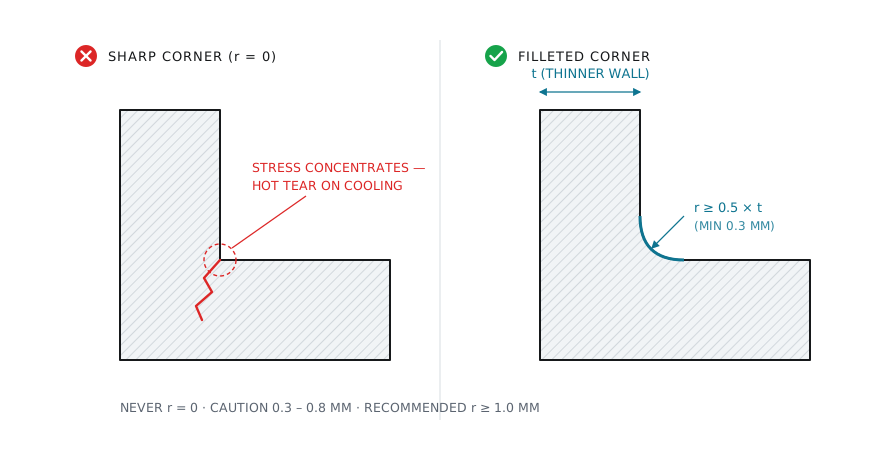
Sharp internal corners concentrate stress exactly where the casting is hottest and weakest, tearing the metal as it contracts — and they create knife-edges in the shell that break off and become inclusions. Fillet every internal corner: at least half the thickness of the thinner wall meeting at the corner, and never dead sharp.
Never
r = 0 (sharp)
Caution
r = 0.3 – 0.8 mm
Recommended
r ≥ 1.0 mm
r ≥ 0.5 × t · r_min = 0.3 mm absolute
t = thinner of the two walls meeting at the corner
Section 07
Overhangs & Undercuts
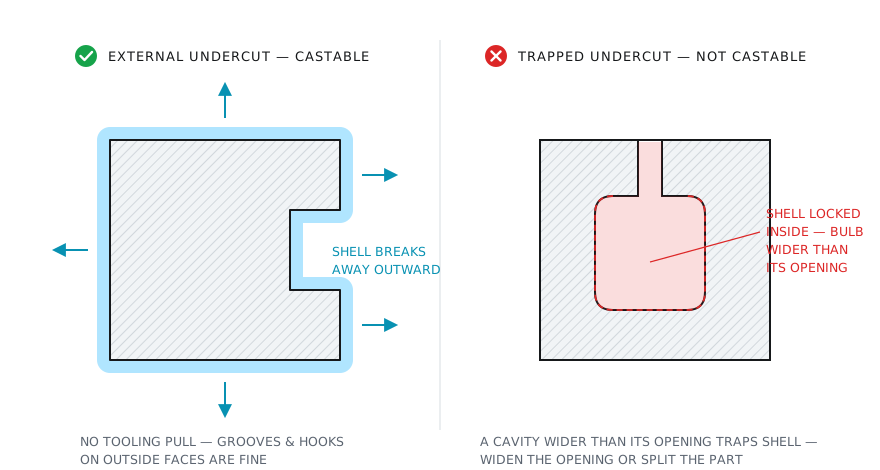
Because the shell is broken away rather than pulled like a tool, external undercuts — grooves, hooks, overhangs on outside faces — cast without issue and need no draft. The exception is a trapped undercut: an internal cavity that is wider than its opening. The ceramic that forms inside it is mechanically locked in the casting and cannot be removed. Widen the opening so the cavity meets the blind-feature rules above, or split the part.
Recommended
External undercuts — castable
Never
Trapped internal undercuts
Section 08
Quick-Reference Summary
| Feature | Minimum | Recommended | Notes |
|---|---|---|---|
| Wall (any) | 2.0 mm | ≥ 2.0 mm | Applies to free-standing and supported walls alike |
| Section transition | L ≥ 3 × t_thin | r ≥ 0.5 × t_thick | Prevents hot spots at junctions |
| Through feature width W | 1.5 mm | ≥ 3 mm cast | W/t ≥ 1/5 — narrower: machine it |
| Blind feature depth | D/W ≤ 2.0 | D/W ≤ 1.5 | W = narrowest opening width |
| Internal channel Ø | 4 mm | ≥ 6 mm | L/Ø ≤ 5:1 without a vent |
| Drain holes (voids) | Required | Ø ≥ 6 mm | ≥ 2 per enclosed void |
| Gate pad | 20 mm² | ≥ 10 × 10 mm | At the heaviest section only |
| Internal corner radius | 0.3 mm | r ≥ 0.5 × t | Sharp corners hot-tear |
| Bounding envelope | — | ≤ 195 mm any axis | Must fit 300 × 195 × 290 mm |
| Aspect ratio | — | L/W ≤ 8:1 | Higher distorts and cracks |
All dimensions refer to your CAD model as uploaded — shrink compensation (+1.5–2.5%, alloy-dependent) is applied to the pattern on our side.
Check your part automatically
Upload a STEP file and our quoting engine runs manufacturability checks against your geometry — wall thickness, build volume, and more — and prices the part in seconds.
Get an Instant Quote